Reprinted with permission from Angus.com
Fly control conversations among beef producers often circle back to the same question: “Why invest in fly control if my neighbor isn’t doing anything?” If flies simply move back and forth across fence lines, it can feel like effort on one operation is undone by inaction next door.
That assumption, however, doesn’t hold up when it comes to horn flies. “That’s a common misconception we hear,” says Dr. Brandon Koch, beef nutritionist with KENT® Nutrition. “Horn flies behave very differently than people think, and that matters when you’re deciding whether fly control is worth it.”
Why the horn fly is different
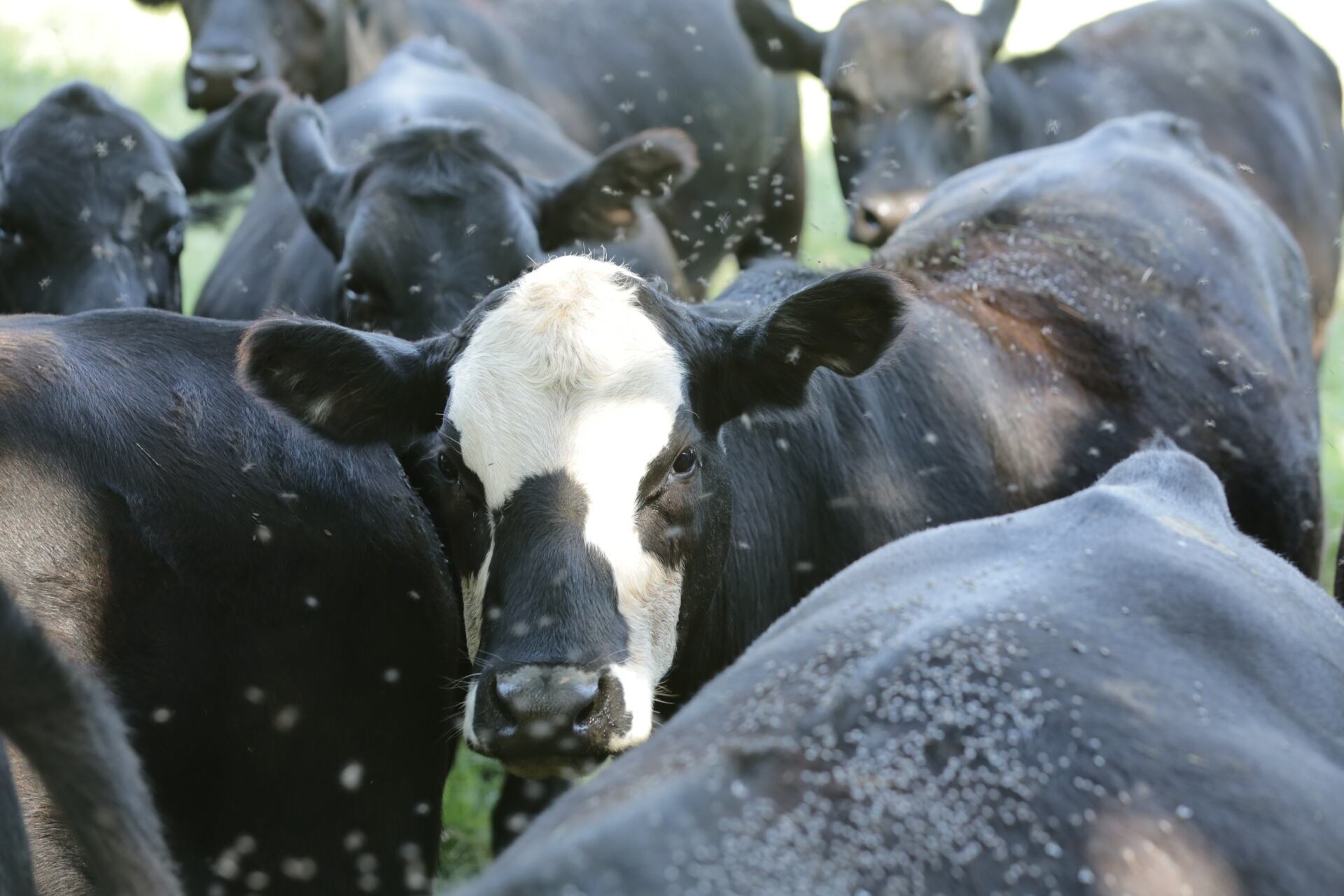
Not all flies behave the same. Horn flies, the primary fly challenge for beef cattle on pasture, are what entomologists describe as host-specific. Once they find a cow, they spend most of their life there.
“Horn flies live almost entirely on cattle,” Koch explains. “They don’t travel long distances, and they don’t bounce from herd to herd the way people assume.”
Horn flies leave the animal briefly to lay eggs in fresh manure, then return, often to the same animal. “They really prefer not to travel far to find an initial host” Koch says. “Even if cattle are across the fence from each other, horn flies don’t generally move back and forth”
What matters in fly control for cattle decisions
This behavior becomes especially important when evaluating feed-through fly control programs, which work by treating manure and preventing fly larvae from developing into adult flies.
“If you’re controlling flies on your cattle, you’re controlling the flies that live on your cattle,” Koch says. “What your neighbor does, or doesn’t do, doesn’t erase that benefit.”
In practical terms, producers can still reduce fly pressure, improve cattle comfort and protect performance even if the operation next door doesn’t participate in fly control.
Not all flies behave the same
Part of the confusion comes from the misbelief that all flies act similarly. Stable flies, for example, behave differently than horn flies. “Stable files can travel` farther, and they’re often associated with barns, lots or decaying organic material rather than cattle themselves.” Koch explains.
Horn flies, by contrast, rely almost exclusively on manure from cattle and spend nearly their entire life cycle on the animal. “That’s why feed-through fly control is so effective against horn flies,” Koch says.
Fly pressure is a herd-level issue
Another misconception is tied to how fly pressure is evaluated for a cowherd. A cow covered in flies, versus one that looks relatively clean, doesn’t tell the full story. “Fly pressure is a herd-average issue,” Koch says. “You have to look at overall behavior and overall numbers, not just one animal.”
Producers may assume flies are coming from neighboring cattle when inconsistent intake, feeder placement or missed days in their own program may allow flies to persist. “If intake isn’t consistent, fly control won’t work the way it should,” Koch notes.
Why fly control pays, even in mixed-management areas
Fly control decisions should be evaluated based on returns to the individual operation. Horn flies create stress, reduce grazing time and divert energy away from production. Reducing that pressure improves efficiency for the herd, and that can result in more money in the producer’s pocket.
“Every fly you prevent from developing is one less fly biting your cattle,” Koch says. “Over a season, that adds up.”
Field observations consistently show cattle with lower fly pressure spend more time grazing, maintain intake and experience less stress during summer months.
Focus on what you can control
When evaluating fly-control strategies, Koch encourages producers to focus on factors within their control on their operation.
That includes:
- Ensuring consistent intake of feed-through fly control products
- Monitoring mineral or supplement consumption
- Managing manure and organic material that can serve as breeding sites
- Watching cattle behavior for early signs of fly pressure
“You can’t control outside factors,” Koch says. “But you can manage your own operation, and that’s where the return comes from.”
The bottom line
The idea that fly control only works if everyone participates is a persistent myth, one that can keep producers from addressing a costly but manageable problem.
“Horn flies stay on cattle,” Koch says. “If you control flies on your herd, you’ll see the benefits.”