What is Heat Stress in Beef Cattle?
Heat stress occurs when a cow’s body temperature exceeds its normal range, due to high environmental temperatures and humidity. Cattle are particularly susceptible to heat stress due to their limited ability to sweat, making it challenging for them to cool down. This physiological limitation makes them vulnerable during hot and humid weather, potentially leading to:
- Increased respiration rates and higher susceptibility to respiratory and metabolic disorders.
- Reduced feed intake and weight gain.
- Reduced milk production in lactating cows.
- Adverse effects on reproduction, including disruption of the normal estrous cycle, reduced conception rates, embryo mortality and more.
When cattle are exposed to high temperatures and humidity, their bodies undergo various physiological changes as they struggle to regulate internal temperatures. These effects can significantly reduce productivity, resulting in economic losses for producers.
Assessment Tools for Cattle Heat Stress
Several factors can contribute to heat stress, the most obvious being high ambient temperatures, especially when combined with humidity levels. The Beef Cattle Temperature Humidity Index (THI) Chart is a valuable tool for assessing heat stress risk.
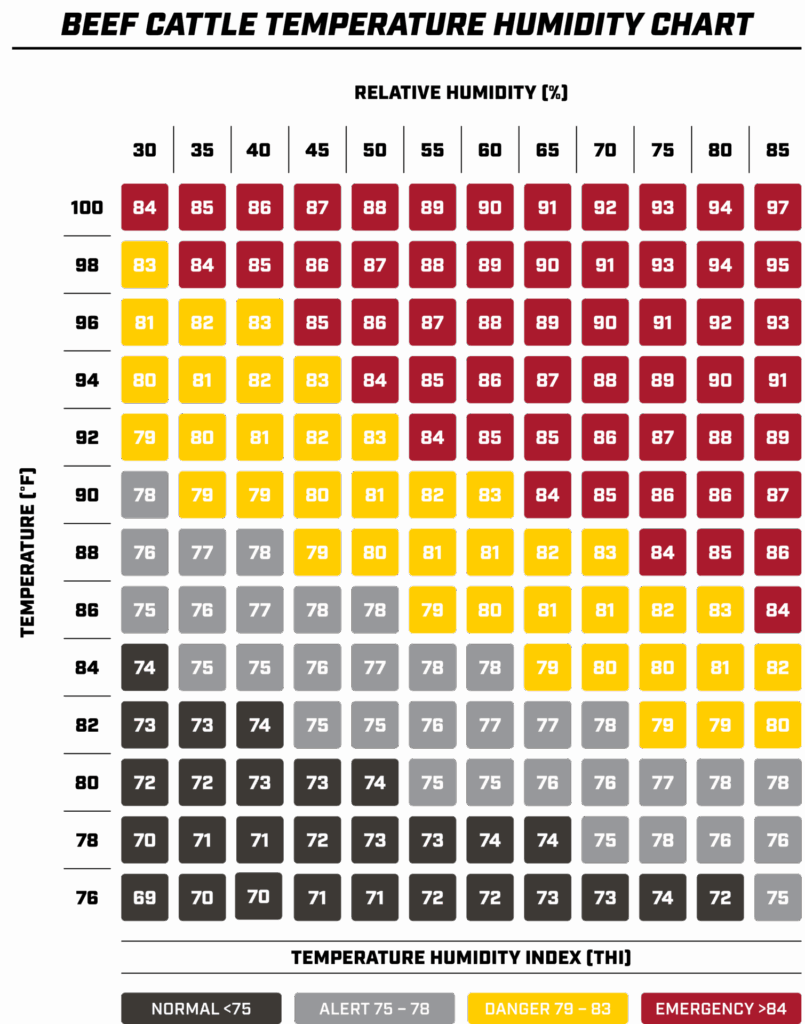
The Beef Cattle THI Chart shows the relationship between temperature and humidity, helping producers determine the risk level of heat stress on any particular day. Utilizing a THI is more productive than just measuring temperature alone as humidity has a large effect on cattle. Cattle are able to tolerate higher temperatures better when the humidity is low, but as the THI shows, the higher the humidity becomes, the more cause for concern during high temperatures.
Another assessment tool producers can use is a panting score system the USDA Meat Animal Research Center developed to assess heat stress severity in cattle. The panting score system is separated into six different levels, each level associated with specific behaviors and stress symptoms. Varying stages of stress will be evident throughout the herd as environmental conditions become more intense.
Heat stress is a serious concern for beef cattle producers, especially in regions like the Midwest where high temperatures and humidity are common. For questions on cattle management or nutrition or for more information on Kent® products, contact our Inside Sales Team.