A difficult start that shaped this rescue pony’s journey
Beans came from a hoarding situation where multiple horses were in desperate need of rehoming. She was found in a cramped stall the size of a closet, with no real opportunity to develop. “When we saw Beans for the first time, she was in a stall that was not big enough for her to turn around in. She could only go backwards and forwards. It was basically the size of a closet,” says Destiny Dale, co-owner of Triple 7 Rescue and Rehabilitation. Even getting her out of the hoarding environment came with challenges. “I went back a few days later to pick her up, and two people with chains all over her nose loaded her onto the trailer, and they made her out to be a crazy monster of a pony,” Dale recalls. When she arrived at Triple 7, Beans was filled with potential, but there was also a long road ahead.
Understanding her body condition: coat, muscle and energy
Beans wasn’t severely underweight, though her overall body condition reflected a lack of movement and routine. It was clear she had been left standing in her stall for long periods, without the kind of daily work to help develop muscle and maintain her topline and energy. “When we got her here, physically, she was not super underweight, but she was pretty dull. She definitely did not have the dapples and the shine that she has now. She didn’t have any muscles,” Dale notes. As she began a consistent training routine, her body had to adjust to these new demands. Regular work asked more of her, both physically and nutritionally. “She actually did lose a bit of weight once we started working her because she wasn’t used to doing the work,” Dale says. That response helped define other steps in her care plan. It was clear she also needed the right balance of nutrition to support energy, rebuild muscle and maintain condition as her workload increased.
Supporting equine body condition and energy through nutrition
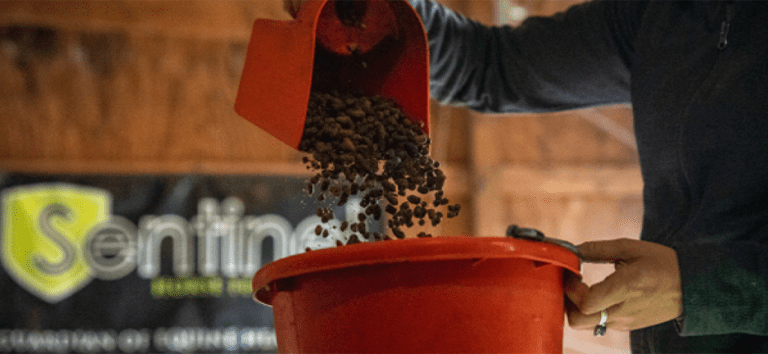
Nutrition was a key part of Beans’ progress as her workload increased. “In order to get Beans to where she’s at now, we started feeding her Sentinel® Performance LS. We noticed that she needed a feed to keep weight and to gain some muscle,” Dale says. The focus was on pairing quality forage with a feed that could support condition and performance. Over time, the changes showed in her coat, topline and overall presence. And her energy followed that same trajectory. “There was a time when we first started her under saddle, she didn’t have the energy it seemed that she needed. When we changed things up, now she doesn’t seem like she’s struggling to keep up with anything,” says Dale.
Letting training reveal Beans’ strengths
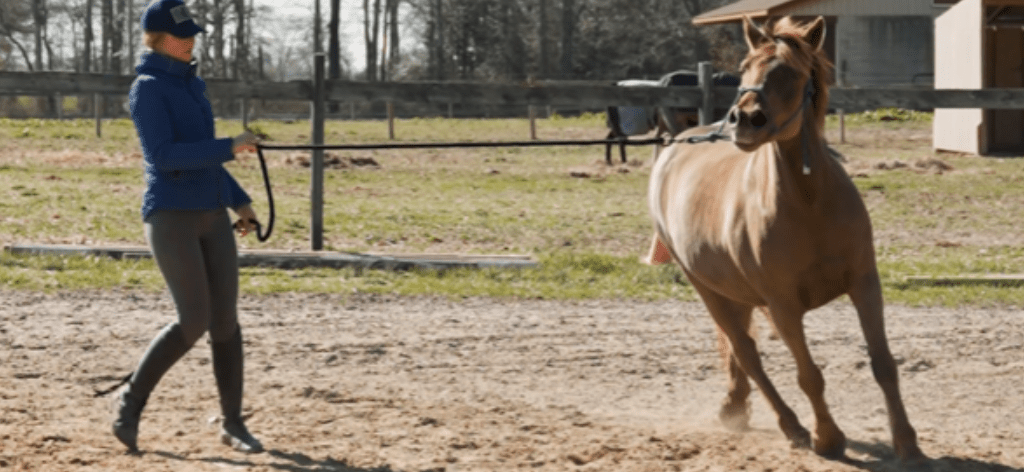
There was no fixed outcome for Beans from the start. The approach at Triple 7 focuses on building a foundation and letting her preferences guide the next step. “For any horse that comes to Triple 7 that’s not started, we don’t have a set plan. The goal is to get them started under saddle and then find out what they like to do,” Dale says. Beans made that decision clear early on. “She really did enjoy jumping, and she really likes the kids … She came along pretty quickly. We started her under saddle, and then the kids started riding her,” Dale recalls. For many riders, she became part of their first milestones. “A lot of the kids that ride here now did a lot of their first things on Beans,” Dale adds.
From first ride after rescue to performance horse
Today, Beans stands out both at home and in eventing competitions. Her attitude shows in her work, and she always draws attention. “Everyone loves Beans at the shows and competitions. They see her, and they want to know what she is because she looks really good and does really well … I think people are a little bit taken aback sometimes when they learn about Beans’ story and where she came from,” Dale notes.
What progress looks like for a rehab pony
For those who have worked with Beans from the beginning, the change shows up in the small moments as much as the big ones. It is how she carries herself, how she engages with her rider and how she settles into her work. The horse that once stood in a stall with no room to move now walks into the show ring with purpose and confidence. “Seeing a horse that came from a bad situation and now has a good relationship with a kid and enjoys what she does—it feels really good,” Dale says. That connection is what stands out. It is not only about condition or performance. It is about trust, consistency and a partnership that develops over time. Watching a young rider learn on a horse like Beans adds another layer to that progress. She is part of their first rides, their first milestones and the moments that build confidence. “It’s really a cool feeling to look back on where they came from and then look at where they are now,” Dale reflects. It’s a view that does not come into focus all at once, but builds gradually through daily care, steady work and the right support. Then one day, you step back and realize just how far they have come.