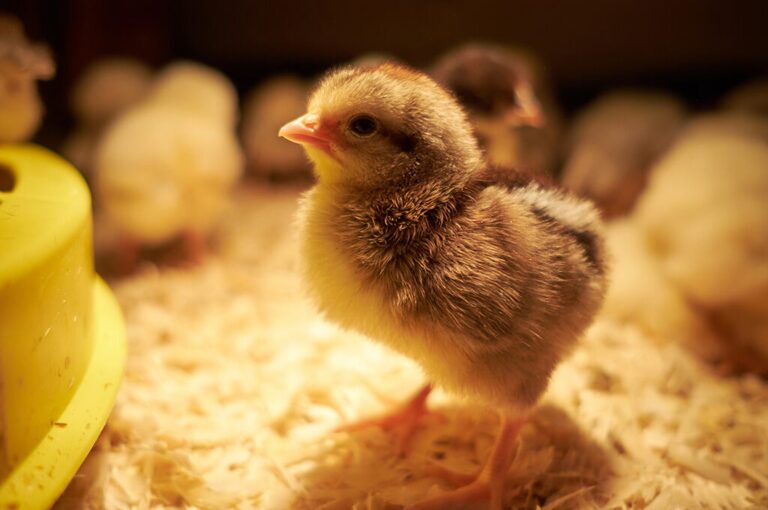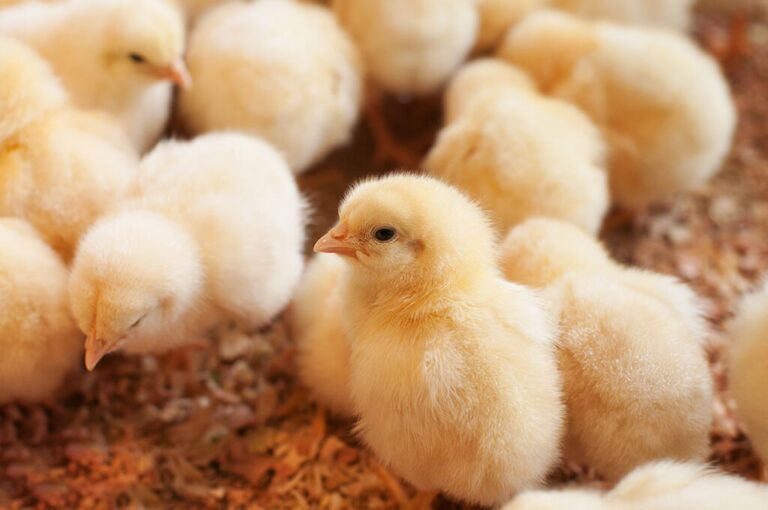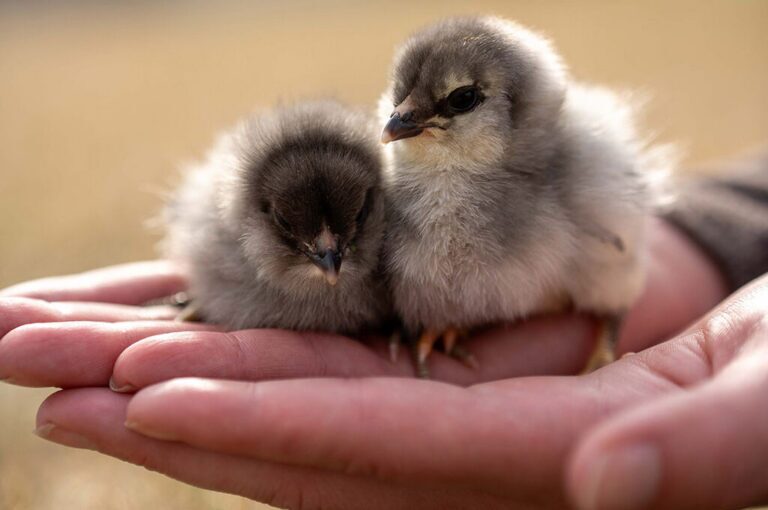
Chicks are much like our own babies. They don’t really stick to a regular schedule and instead eat when they’re hungry, sleep when they’re tired, and play and poop in between. Feed and clean water should be available 24/7 for chicks until they are about eight weeks old and ready to go outside, at which time they can be fed on a regular schedule.
Hatch Through 6-Week-Old Chickens
What do chicks eat? Chicks need to be fed chick starter feed, like Home Fresh® Chick Starter. Chicks love it! Higher in protein, this formula provides chicks with all the nutrients they need for their growing bodies. It’s a smaller-sized crumbled feed so it’s easy for chicks to consume.Treats for 6-week-old chicks should be limited. Chopped fresh herbs or weeds, some raw rolled oats or scrambled eggs are good for baby chicks. Filling a dish with coarse dirt or chick grit is essential if they are eating anything other than chick feed.
6 Weeks Through 20-Week-Old Chickens
Young female chickens are referred to as pullets until they lay their first egg. At this point, more varied treats can be offered, including fresh fruits and vegetables, berries, whole grains and seeds. Grit can still be available to them as well as fresh water any time feed is being offered.
Around 20 weeks, pullets will be approaching laying age and should be switched to a layer feed like Home Fresh Extra Egg Layer. This feed has 17% protein and the calcium levels laying hens need to produce strong shells.
Other Feeding Considerations
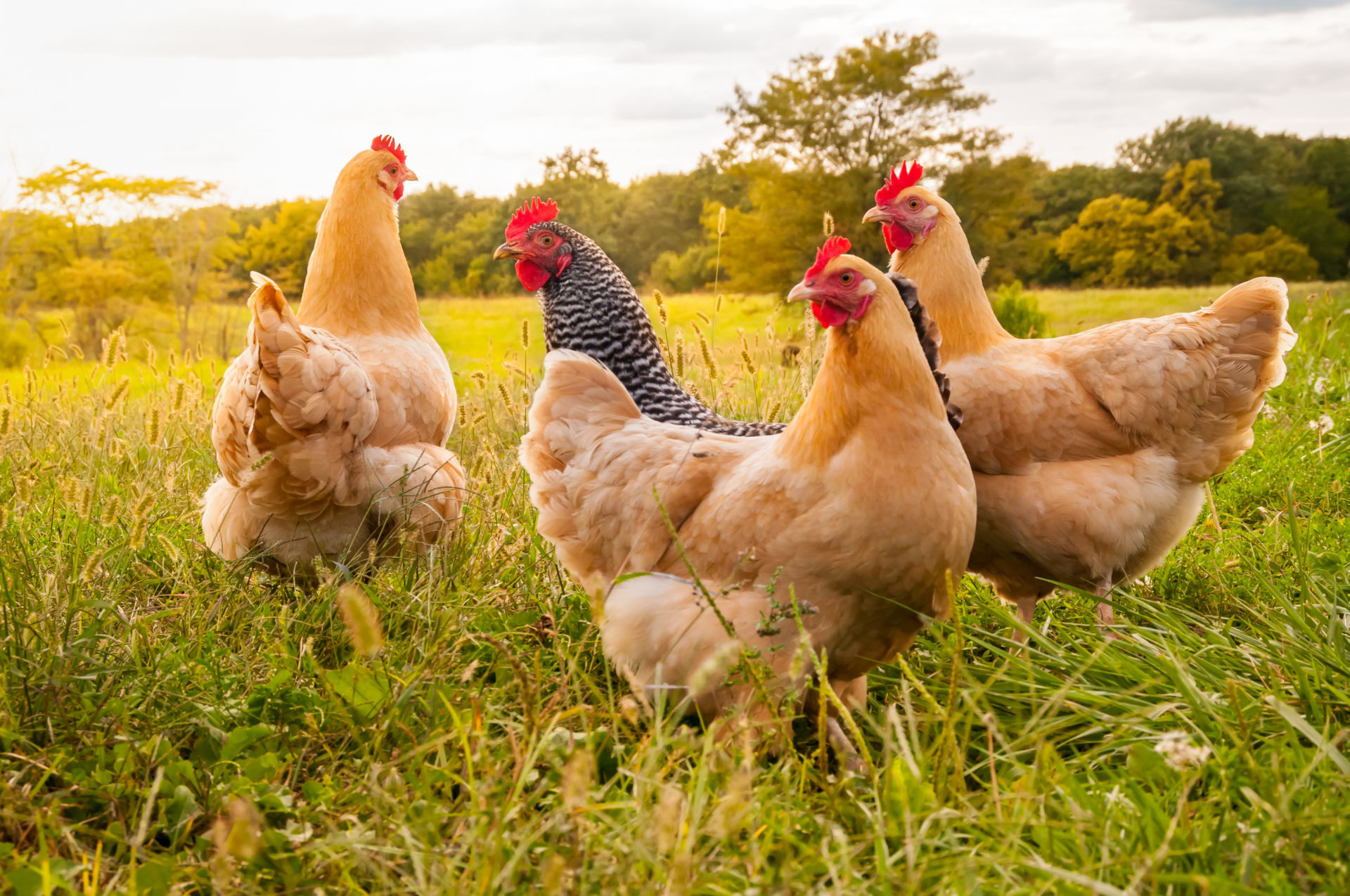
Chickens shouldn’t be fed layer feed until they are close to laying age because the added calcium isn’t good for them. If laying hens don’t get enough calcium in their diet, they will leach it from their bones, so putting out supplemental calcium for layers is an option.Roosters in a flock of laying hens can be fed layer feed, but if you have a flock that consists only of roosters, or older hens that aren’t laying any longer, a better option would be Home Fresh Grow & Show since they don’t need the high calcium levels that active layers require.
Feeding Tips
- Feed and water should be provided inside the coop where your birds feel safe.
- An adult hen eats about 1.5 pounds of feed weekly. This amount can be rationed out each day to reduce feed waste, but make sure to adjust amounts as necessary.
- Treats for adult chickens should be limited to no more than 10% of their total diet. It is a good idea to provide treats only after their regular feed to ensure they consume a balanced diet. Options for treats include fruits, vegetables, whole grains, seeds, Sunny Mealworm and Chicken Chatter.