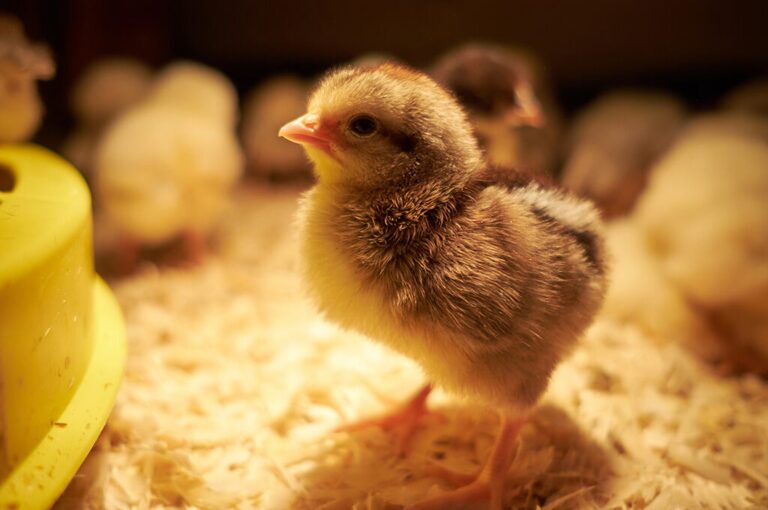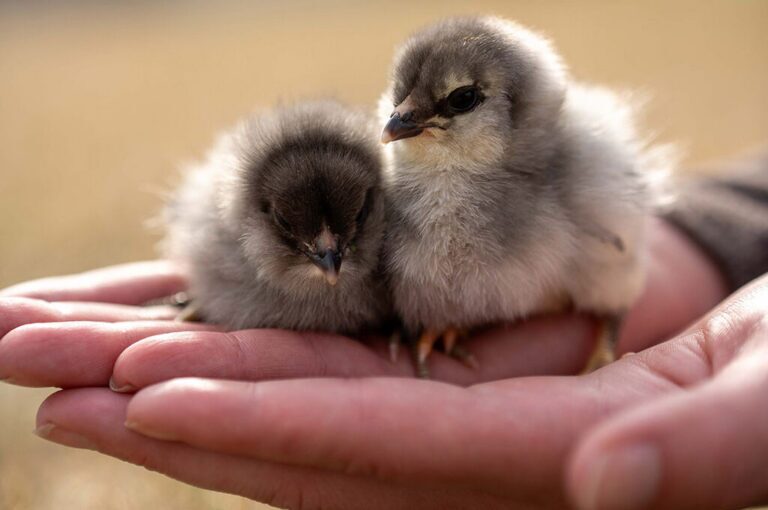
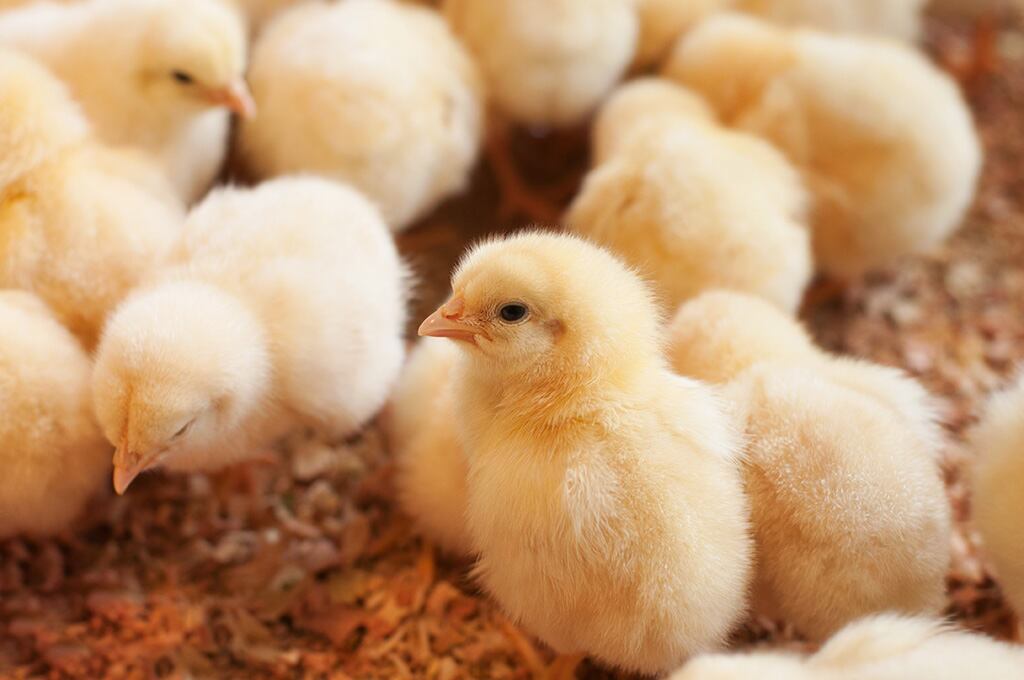
Bringing home chicks is exciting. They’re small, curious and full of potential. But what happens in the first 48 hours is more than routine care; it’s nutritional groundwork that can influence how your birds grow and perform in the days to come.
During development inside the egg, chicks rely entirely on nutrients stored in the yolk sac. That yolk provides energy, protein, fats, vitamins and maternal antibodies. After hatching, chicks continue absorbing the remaining yolk for the first two to three days. This natural reserve is what allows them to survive shipping directly after hatch.
But survival and thriving are not the same thing. The moment chicks arrive in your brooder, the nutritional transition begins. What they consume, and how quickly they begin consuming it, shapes the development of their digestive system, immune response and overall growth trajectory.
Early feed intake drives chick growth
The earlier chicks begin consuming a balanced starter feed, the quicker their digestive tract begins maturing. Early intake supports:
- Development of digestive enzymes
- Activation of intestinal cells
- Establishment of beneficial gut bacteria
- Stronger immune system function
- More consistent early weight gain
Chicks that delay feed intake may lose body weight, become dehydrated or struggle to catch up developmentally. Even if they appear healthy, a slow nutritional start can affect uniformity and resilience later.
For the first day or two, it can help to make feed highly visible, placing small amounts in a shallow tray so chicks can easily see and access it while they learn where their feeder is located. Offering a consistent, nutritionally complete starter such as Home Fresh® Chick Starter Crumbles helps ensure that once chicks begin eating, they are receiving
the balanced protein and essential nutrients designed specifically for this early stage.
Protein quality and chick development
Because early growth happens at a rapid pace, starter feeds are formulated with higher protein levels. Muscle tissue, organs, feathers and immune components are all developing at the same time. However, it’s not just about crude protein percentage. Proteins are made of amino acids, and chicks require specific amino acids in proper balance. Methionine, often the first limiting amino acid in poultry diets, plays a critical role in:
- Muscle development
- Feather growth
- Antioxidant activity
- Immune function
Even if total protein levels appear sufficient, if methionine levels are inadequate, growth potential can become limited. That’s why balanced amino acid formulation is so important in a starter feed. Feed forms like crumbles are designed to provide that balanced amino acid profile, supporting steady, consistent development from the very beginning.
Digestibility Is critical in chick feed
In the first few days of life, a chick’s digestive system is still maturing. Compared to a mature bird, enzyme production is limited, which can affect how efficiently nutrients are broken down and absorbed. Because of this, both ingredient selection and feed processing play a critical role in early nutrition.
Highly digestible ingredients improve nutrient availability, helping chicks make better use of every bite.
Crumble vs. mash; which Is best?
Mash feed is comprised of finely ground ingredients, blended together. But those ingredients can vary in size, texture and density. Young chicks are naturally selective eaters, meaning they may peck at and consume the particles they prefer, often larger or more visually distinct pieces, while leaving others behind.
Over time, selective eating can lead to inconsistent nutrient intake. One bite may be higher in carbohydrates, another low in key amino acids or minerals. While the feed as a whole is formulated to be balanced, this sorting behavior can disrupt nutrient balance at the bird level.
Crumbles, on the other hand, are created by pelleting the feed first and then breaking the pellets into smaller pieces. The pelleting process cooks and binds ingredients together, so each crumble contains a more uniform distribution of nutrients. As a result, each bite is more consistent, helping ensure chicks receive the intended balance of amino acids, vitamins and minerals with every feeding. Additionally, during pelleting, feed is exposed to heat, moisture and pressure, which can improve starch digestibility and enhance protein utilization.
Chick gut health begins immediately
As soon as chicks start eating and drinking, their gut microbiome begins forming. This community of bacteria plays a central role in digestion, immune response and disease resistance.
Certain nutritional components can help support microbiome development. Prebiotic fibers provide fuel for beneficial bacteria. Compounds such as butyrate, a short-chain fatty acid, serve as an energy source for intestinal cells, supporting gut lining integrity. Starter feeds that include gut-supportive components help establish a strong digestive foundation early in life. A strong gut early in life can:
- Improve nutrient absorption
- Support immune resilience
- Help birds better cope with environmental stressors
- Reduce infections and challenges like coccidiosis
Nutrition as the foundation for chick development
Warmth and water are critical in the first 48 hours. But nutrition is what activates growth systems. Those first feedings signal the digestive tract to begin functioning independently. They provide amino acids for muscle development, supply minerals for bone formation and introduce the substrates that shape the microbiome.
The first 48 hours are not just about getting chicks through the transition home. They are about initiating the nutritional systems that determine how your flock performs, weeks and months down the road.
A strong flock doesn’t begin at laying age, it begins the moment that first bite of starter feed is consumed. Giving chicks a consistent, balanced option like Home Fresh Chick Starter helps ensure that first bite supports everything that follows.