
Get the nutrition advice you need.
Our expert team is here to help you make informed dietary decisions, educate others and provide horses with quality nutrition for happy, fulfilling lives.

Meet our nutrition team
Our equine specialists at your service.

Dr. Randel Raub, PhD
Equine Research and Nutrition Specialist
Dr. Randy Raub, PhD, started with KENT Nutrition in 2020 as Director, Research and Nutrition and he leads the nutrition team...

Jeanne van der Veen
Sentinel Equine Specialist
Van der Veen is an equine expert who supported the founding of Sentinel Horse Nutrition. Her expertise informed the product formulation for Sentinel's 100% extruded feed.

Kristyn Sturken
Sentinel Equine Specialist
Sturken joined KENT Nutrition in 1995 and supports marketing and product development with a major focus on her passion; equine products.
Get the nutrition advice you need.
Our expert nutrition team is passionate about answering your dietary questions, from feed options for foals and pregnant mares to the right nutrition for horses prone to digestive upsets and metabolic issues.
Yes, we have several products, including supplements and feeds, depending on the horse’s needs. In general, our Sentinel Performance LS and Sentinel Senior extruded feed products have both worked well for horses with PSSM. We also have Sentinel Care Carb Guard and other Sentinel Care supplements that may be more appropriate, depending on the individual horse. (Jeanne van der Veen)
I would recommend Sentinel Performance LS extruded horse feed. An extruded feed is easily broken down by horses with poor dentition, and it can also be easily made into a mash. This feed also contains 12% fat for efficient weight gain and high fiber content for naturally safe feeding. In addition, Sentinel Performance LS contains multiple ingredients to support an aging horse’s digestive system. (Jeanne van der Veen)
The mare may need additional vitamins and minerals in the last two to three months of gestation to support foal growth, along with energy to maintain body condition. The horse may need a protein, mineral and vitamin supplement, like Sentinel Care Equine Choice Topline 30. During the last two to three weeks before foaling, it’s recommended to switch to a feed designed for lactation and foaling, like Sentinel Safe Start or Sentinel XT Grow. (Kristyn Sturken)
Every horse is different, and sometimes the best choice may, unfortunately, require trial and error. Sentinel Senior is a great choice, and we’d recommend it in this situation. There are varying degrees of Cushing’s and insulin resistance, and these conditions can change over time. If your horse is doing well, stick with this program. If you see changes or the condition progresses, different nutritional approaches can be considered. (Kristyn Sturken)
Have a question for our nutritionists?
Health Management
Equine feeding goals based on health concern.
These expert recommendations are designed to help you make informed decisions about your client’s nutritional health.
- Maintain consistent feed intake; type and amount
- Feed multiple meals; smaller amounts, more often
- Feed a low starch and low sugar diet
- Feed a high fat diet if additional calories are needed
- Provide adequate hay/fiber, avoiding poor-quality stemmy, coarse hay
- Feed a balanced calcium-to-phosphorus ratio diet
- Practice good parasite control
- Feeding prebiotics and probiotics may be beneficial
- Maintain consistent time-of-day feeding
- Make grain and hay changes gradually
- Reduce rate of feed intake by:
- Feeding an extruded feed
- Placing a large smooth stone in feed bucket
- Placing a salt block in feed bucket
- Utilizing a custom feeder
- Separating horses to minimize feeding competition
- Maintaining a consistent time-of-day feeding
- Soak feed to create a mash
- Place feed and/or hay below chest height or on ground
- Wet hay and/or grain to minimize dust
- Reduce dusty hay feeding by feeding a high-fiber (>15%) feed OR substitute hay with hay pellets or cubes
- Turn horse out on pasture as often as possible
- Feed to promote immune system function:
- Balanced mineral and vitamin supplementation (antioxidants)
- Soak feeds to make a mash for ease of chewing
- Substitute long-stem hay with chopped forage, cubes and/or hay pellets
- Feeding an extruded feed product may be beneficial
- Ensure pregnant mare receives proper vitamin and mineral supplementation during last trimester
- Keep foal in lean body condition (BCS 4-5) by maintaining a higher protein-to-energy ratio
- Don’t overfeed
- Feed foals a low starch and low sugar diet
- Feed foals to promote proper bone growth and development:
- Adequate protein plus vitamin and mineral balance
- Reduce caloric intake by:
- Reducing grain ration or feeding lower calorie grain ration
- Feeding a nutrient-dense supplement in place of grain ration
- Reducing hay feeding and using grazing muzzle on pasture
- Keep feed and barn protected from opossums, other rodents and birds
- Feed to maximize immune system function:
- Balanced mineral and vitamin supplementation (antioxidants)
- High levels of Vitamin E
- Feed to reduce digestive stress by:
- Feeding a high-quality, palatable forage
- Feeding a high fiber, low starch/sugar grain ration
- Feeding fat as needed to meet caloric requirements
- Feed high-quality protein to help rebuild tissues
- Supplement folic acid especially if on medication for EPM
- Maintain consistent feed intake; type and amount
- Feed multiple meals; smaller amounts, more often
- Feed a low starch and sugar diet
- Feed a high-fat diet if additional calories are needed
- Provide adequate hay/fiber
- Feed a supplement containing alfalfa, bio-available calcium and other gastric additives
- Medications/antacids may be necessary
- Increase caloric intake by:
- Feeding a better quality, higher calorie hay or fiber source
- Gradually increasing grain ration
- Feeding a high-fat grain ration or supplement
- Feeding prebiotics and probiotics may be beneficial
- Lower potassium intake to <1.5% of total diet (including forages)
- Reduce high-potassium hay feeding by utilizing a high-fiber (>15%) feed
- Reduce potassium load into horse's digestive system by:
- Feeding multiple meals; smaller amounts, more often
- Keeping horses out on pasture
- Restrict caloric intake of overweight horses by:
- Reducing grain ration or feeding lower calorie grain ration
- Feeding a nutrient-dense supplement in place of grain ration
- Reducing hay amount fed (min. 1% body weight)
- Using grazing muzzle on pasture
- Feed a very low starch and sugar diet including hay/forage
-
- Manage grazing for when pasture is lower in NSC
-
- Utilize high-fat diets only if needing additional calories
- Feed multiple meals; smaller amounts, more often
- Feed to promote immune system function:
- Balanced mineral and vitamin supplementation (antioxidants)
- Maintain consistent feed intake; type and amount
- Feed multiple meals; smaller amounts, more often
- Feed a low starch and sugar diet, including hay
- Manage pasture grazing for when pasture is lower in starch and sugar
- Feed a high-fat diet if additional calories are needed
- Feed to promote hoof wall growth and repair by:
- Adequate protein, minerals and vitamins
- Maintain a high-quality, high-fiber diet with hay and/or forage
- Feed a highly digestible (extruded) low starch and sugar diet
- Maintain consistent feed intake and time-of-day feeding
- Feed a gastric support supplement with Bacillus subtilis probiotics, yeast extract prebiotics, butyric acid and zinc
- Feed a low starch and low sugar diet
- Feed a high-fat diet if additional calories are needed
- Feed to promote immune system function:
- Balanced mineral and vitamin supplementation (antioxidants)
- Feed a VERY low starch and sugar diet including hay/forage (hay ≤ 12%)
- Restrict caloric intake of overweight horses by:
- Feeding a nutrient-dense supplement in place of grain ration
- Reducing hay amount fed (min. 1% body weight)
- Using grazing muzzle on pasture and avoiding times of higher NSC
- Utilize high fat/oil supplement to meet caloric requirements
- Feed multiple meals; smaller amounts, more often
- Feed to promote immune system function
- Balanced mineral and vitamin supplementation (antioxidants)
- Limit level of protein, supplementing with amino acids to meet requirements:
- Feed grass hays, avoid alfalfa and clover
- Limit level of fat, avoiding high fat diets
- Limit levels of calcium and phosphorus, meet minimum requirements
- Feed a high fiber diet to meet primary caloric needs
- Feed easily digestible (soluble) carbohydrates (starch) as needed for additional calories
- Control salt intake
- Feed multiple meals; smaller amounts, more often
- Supplement with B vitamins and vitamin C
- Control level of protein and reduce calcium:
- Feed grass hays, avoid alfalfa and clover
- Feed a balanced energy diet to keep horses in good body condition:
- Fermentable fiber, controlled carbohydrates, fat are needed
- Feed multiple meals; smaller amounts, more often
- Ensure unlimited supply of fresh water at optimal drinking temperature
- Provide long-stem fiber by:
- Feeding additional hay, hay cubes and/or chopped forage
- Provide supplemental fiber by:
- Feeding a high fiber (>12%) feed
Expert nutrition notes
Educate clients about equine feeding fundamentals
How do you recommend starting a feeding program? “Horses are grazers and thus are designed to consume small meals frequently throughout the day,” Raub said. “So, have owners start their feeding […]
Your guide to feeding senior horses
Educating your clients on the nutritional needs of horses over the age of 15 doesn’t have to be complicated. Many thrive on their usual diets, but some might need adjustments to their diet based on health status and body condition. Learn how to help horse owners manage their older horse’s nutrition so it remains happy and healthy for the years to come.
Horses and H2O: How water maximizes nutrient intake
A lack of water for even a short period of time can quickly lead to significant health risks. However, horse owners must learn that proper hydration is not merely about drinking. […]
Nutrition Strategies for Easing Equine Travel Stress
Your clients with performance horses have precise nutrition demands for their equine athlete. While diet is integral to maintaining health year-round, the feeding and hydration choices made leading up to, and […]
Get the latest resources from our nutrition team.
Real experiences from equine veterinarians

-
“I think the nutritional value that Sentinel extruded feeds provide to our horses is excellent. It’s easier to chew and digest than pelleted feeds. The calories are higher, and the starches are predigested by the cooking process, allowing for better nutrient availability compared to pelleted feed.”
Founder of TNT Equine
-
“We rely on the experts in nutrition. It’s so innately important to equine health and to the general wellbeing of the horse from the beginning to the end. The Sentinel products have been extremely helpful in providing good nutritional basis for our horses.”
New England Equine Medical & Surgical Center
-
“I grew up feeding my horses Sentinel. It’s a product that’s tried and true. It’s been around a long time. The research behind the product is great. The company itself is fantastic, and the support staff is like no other.”
Practice Manager, TNT Equine

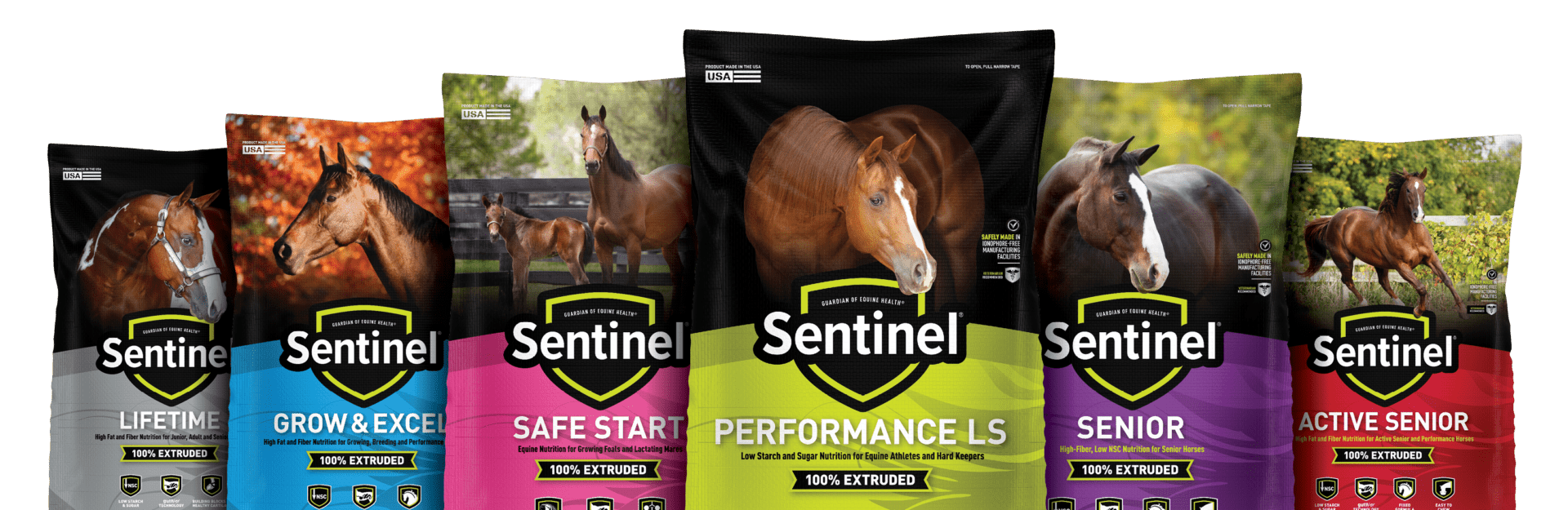
Purposely formulated feeds for every equine need.
No two patients are the same, and that’s why we offer a wide range of equine feeds and supplements for all horses. When you recommend Sentinel, you can be confident you’re recommending quality nutrition for a healthy, fulfilling life.